試験の準備方法-素晴らしいCKS資格トレーリング試験-最高のCKS日本語版受験参考書
Wiki Article
P.S.MogiExamがGoogle Driveで共有している無料の2026 Linux Foundation CKSダンプ:https://drive.google.com/open?id=1aQmKRK_5Xex42rPyBaHUKo4nqxwFIt49
MogiExamのシニア専門家チームはLinux FoundationのCKS試験に対してトレーニング教材を研究できました。MogiExamが提供した教材を勉強ツルとしてLinux FoundationのCKS認定試験に合格するのはとても簡単です。MogiExamも君の100%合格率を保証いたします。
CKS認定試験は、Kubernetesセキュリティの概念とベストプラクティスに関する候補者の知識をテストするように設計されています。この試験では、クラスターのセットアップ、安全な通信、認証と承認、コンテナセキュリティ、ネットワークポリシーなど、幅広いトピックをカバーしています。この試験は、これらの概念を実際のシナリオに適用する候補者の能力をテストするように設計されています。
CKS日本語版受験参考書、CKS試験対応
一部のお客様は時間を無駄にしないホワイトカラーの従業員であり、プロモーションを得るために早急にLinux Foundation認定を必要としますが、他のお客様はスキルの向上を目指している場合があります。そのため、CKSの質問と回答の異なるバージョンを設定することにより、異なる要件を満たすようにします。特別なものは、オンラインのCKSエンジンバージョンです。オンラインツールとして、便利で簡単に学習でき、Windows、Mac、Android、iOSなどを含むすべてのWebブラウザとシステムをサポートします。このバージョンのCKS試験問題をすべての電子デバイスに適用できます。
Linux Foundation CKS(Certified Kubernetes Security Specialist)認定試験は、コンテナ化されたアプリケーションと Kubernetes プラットフォームのセキュリティを確保する能力と知識を証明するプロフェッショナル認定試験です。この試験は、Kubernetes とコンテナ化の経験を持つプロフェッショナルが、セキュアなコンテナオーケストレーションの専門知識を証明するために設計されています。
Linux Foundation Certified Kubernetes Security Specialist (CKS) 認定 CKS 試験問題 (Q20-Q25):
質問 # 20
SIMULATION
Documentation dockerd
You must connect to the correct host . Failure to do so may result in a zero score.
[candidate@base] $ ssh cks000037
Task
Perform the following tasks to secure the cluster node cks000037 :
Remove user developer from the docker group.
Do not remove the user from any other group.
Reconfigure and restart the Docker daemon to ensure that the socket
file located at /var/run/docker.sock is owned by the group root.
Re-configure and restart the Docker daemon to ensure it does not listen on any TCP port.
After completing your work, ensure the Kubernetes cluster is healthy.
正解:
解説:
See the Explanation below for complete solution
Explanation:
1) Connect to the correct host
ssh cks000037
sudo -i
2) Remove user developer from the docker group ONLY
2.1 Verify current groups (optional but fast)
id developer
2.2 Remove ONLY from docker group
gpasswd -d developer docker
2.3 Verify removal
id developer
✅ docker should not appear; other groups must remain.
3) Reconfigure Docker to secure the socket and disable TCP
Docker config file:
vi /etc/docker/daemon.json
3.1 Set socket group to root and disable TCP listeners
Ensure the file contains exactly these relevant settings (merge with existing JSON if present):
{
"group": "root",
"hosts": ["unix:///var/run/docker.sock"]
}
Important:
"group": "root" → docker.sock owned by group root
"hosts" includes ONLY the unix socket (no tcp://)
If the file already exists with other keys, add/adjust only these keys and keep valid JSON (commas!).
Save and exit:
:wq
4) Restart Docker daemon
systemctl daemon-reload
systemctl restart docker
systemctl status docker --no-pager
5) Verify Docker socket ownership and permissions
ls -l /var/run/docker.sock
Expected:
srw-rw---- 1 root root ...
✅ Owner: root
✅ Group: root
6) Verify Docker is NOT listening on TCP
ss -lntp | grep docker
Expected:
No output (or nothing bound to TCP by dockerd)
Optional double-check:
ps aux | grep dockerd | grep -v grep
Ensure no -H tcp://... flags.
7) Ensure Kubernetes cluster is healthy
7.1 Check node and pods
export KUBECONFIG=/etc/kubernetes/admin.conf
kubectl get nodes
kubectl get pods -A
All nodes should be Ready, core pods Running.
質問 # 21
You are deploying a new microservice to your Kubernetes cluster. This microservice will handle sensitive user data and requires access to a database that is also deployed on the cluster. To ensure secure communication between the microservice and the database, you need to configure mutual TLS authentication.
Explain the steps involved in setting up mutual TLS authentication between the microservice and the database.
正解:
解説:
Solution (Step by Step) :
1. Generate Certificates:
- Create a Certificate Authority (CA) to issue certificates for the microservice and the database.
- Generate a self-signed certificate and key for the CA.
- Example (using OpenSSL):
bash
openssl genrsa -out cakey 2048
openssl req -new -x509 -key ca.key -out ca.crt -days 365 -subj Francisco/O=My Company/OU=lT Department/CN=myCA"
2. Generate Certificates for the Microservice and Database:
- Use the CA certificate and key to sign certificates for tne microservice and the database.
- Example (using OpenSSL):
bash
# Generate a certificate request for the microservice
openssl req -new -key microservice-key -out microservice-csr -subj "/C=US/ST=California/L=San Francisco,'O=My Company/OU=lT
Department/CN=microservice"
# Sign the certificate request with the CA
openssl x509 -req -in microservice.csr -CA ca.crt -CAkey ca.key -out microservice-crt -days 365
# Repeat for the database
3. Create Kubernetes Secrets:
- Create secrets in the cluster to store the certificates and keys for the microservice and database.
- Example: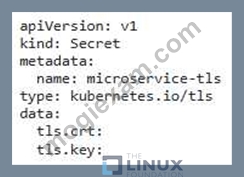
4. Configure the Microservice Container: - Update tne microservice deployment YAML to mount the certificate and key secret. - Set the 'TLS parameters in the database connection string. - Example: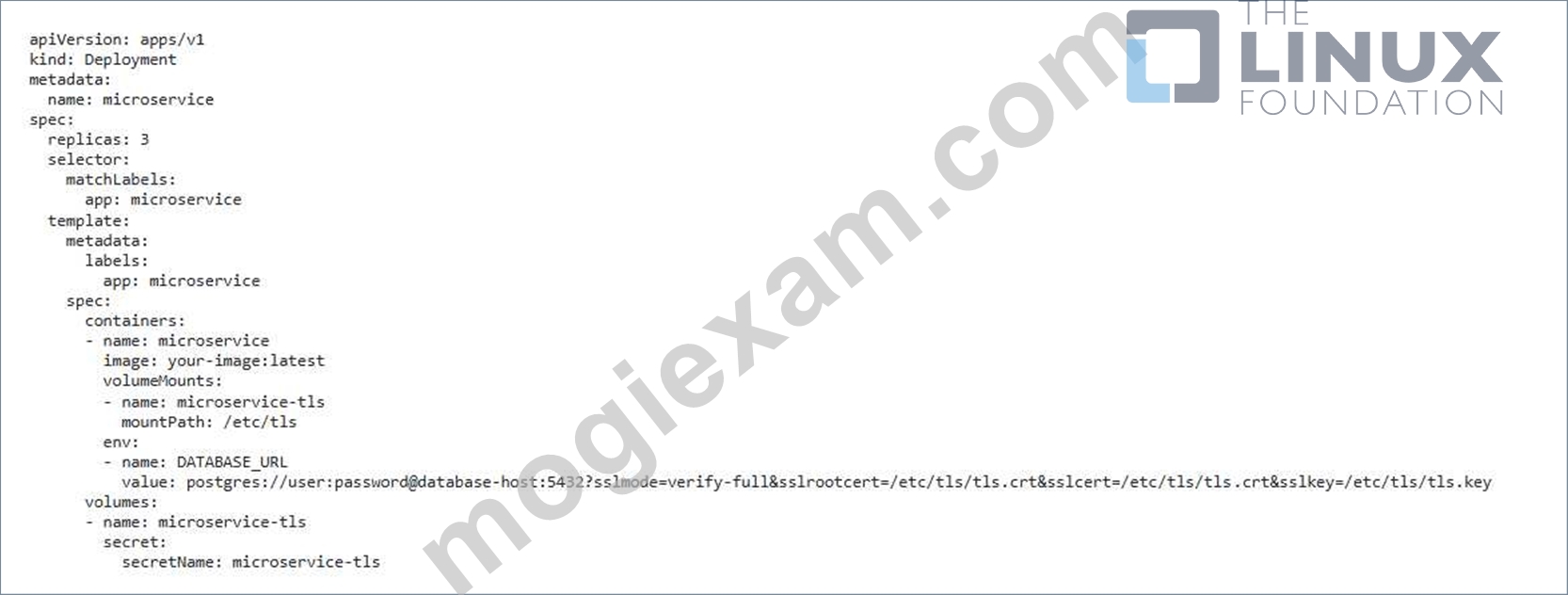
5. Configure the Database Container: - Repeat the steps for the database container, using the database certificate and key. 6. Verify Communication: - Ensure that the microservice can connect to the database securely using mutual TLS authentication. - Test the application to ensure that it functions correctly. These are just a few examples of how to create and utilize custom base images, network policies, RBAC, and mutual TLS- Implementing robust security in Kubernetes is an ongoing effort that requires continuous monitoring and updates to mitigate potential threats.
質問 # 22
SIMULATION
Create a RuntimeClass named untrusted using the prepared runtime handler named runsc.
Create a Pods of image alpine:3.13.2 in the Namespace default to run on the gVisor runtime class.
正解:
解説:
See the Explanation belowExplanation: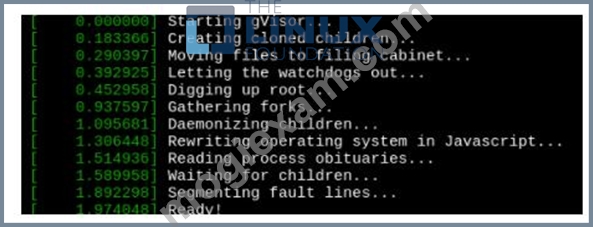
質問 # 23
SIMULATION
Documentation Secrets, TLS Secrets, Volumes
You must connect to the correct host . Failure to do so may result in a zero score.
[candidate@base] $ ssh cks000m40
Path
Key
Context
You must complete securing access to a web server using SSL files stored in a TLS Secret .
Task
Create a TLS Secret named clever-cactus in the clever-cactus namespace for an existing Deployment named clever-cactus.
Use the following SSL files:
File
Certificate /home/candidate/clever-cactus/web.k8s.local.crt
/home/candidate/clever-cactus/web.k8s.local.key
The Deployment is already configured to use the TLS Secret.
Do not modify the existing Deployment.
Failure to do so may result in a reduced score.
正解:
解説:
See the Explanation below for complete solution
Explanation:
1) Connect to the correct host
ssh cks000m40
sudo -i
export KUBECONFIG=/etc/kubernetes/admin.conf
2) Verify namespace exists (quick check)
kubectl get ns clever-cactus
3) Verify certificate and key files exist
ls -l /home/candidate/clever-cactus/web.k8s.local.crt
ls -l /home/candidate/clever-cactus/web.k8s.local.key
Both files must exist.
4) Create the TLS Secret (THIS IS THE MAIN TASK)
Create a TLS Secret named clever-cactus in namespace clever-cactus:
kubectl -n clever-cactus create secret tls clever-cactus
--cert=/home/candidate/clever-cactus/web.k8s.local.crt
--key=/home/candidate/clever-cactus/web.k8s.local.key
Do NOT use apply
Do NOT edit the Deployment
5) Verify the Secret
kubectl -n clever-cactus get secret clever-cactus
Expected type:
kubernetes.io/tls
Optional detail check:
kubectl -n clever-cactus describe secret clever-cactus
You should see:
tls.crt
tls.key
6) (Optional) Confirm Pods are running
Since the Deployment is already configured to use the Secret, Pods should now work.
kubectl -n clever-cactus get pods
質問 # 24
SIMULATION
Context
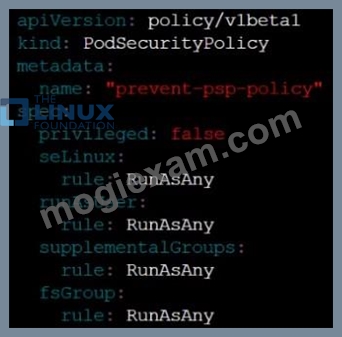
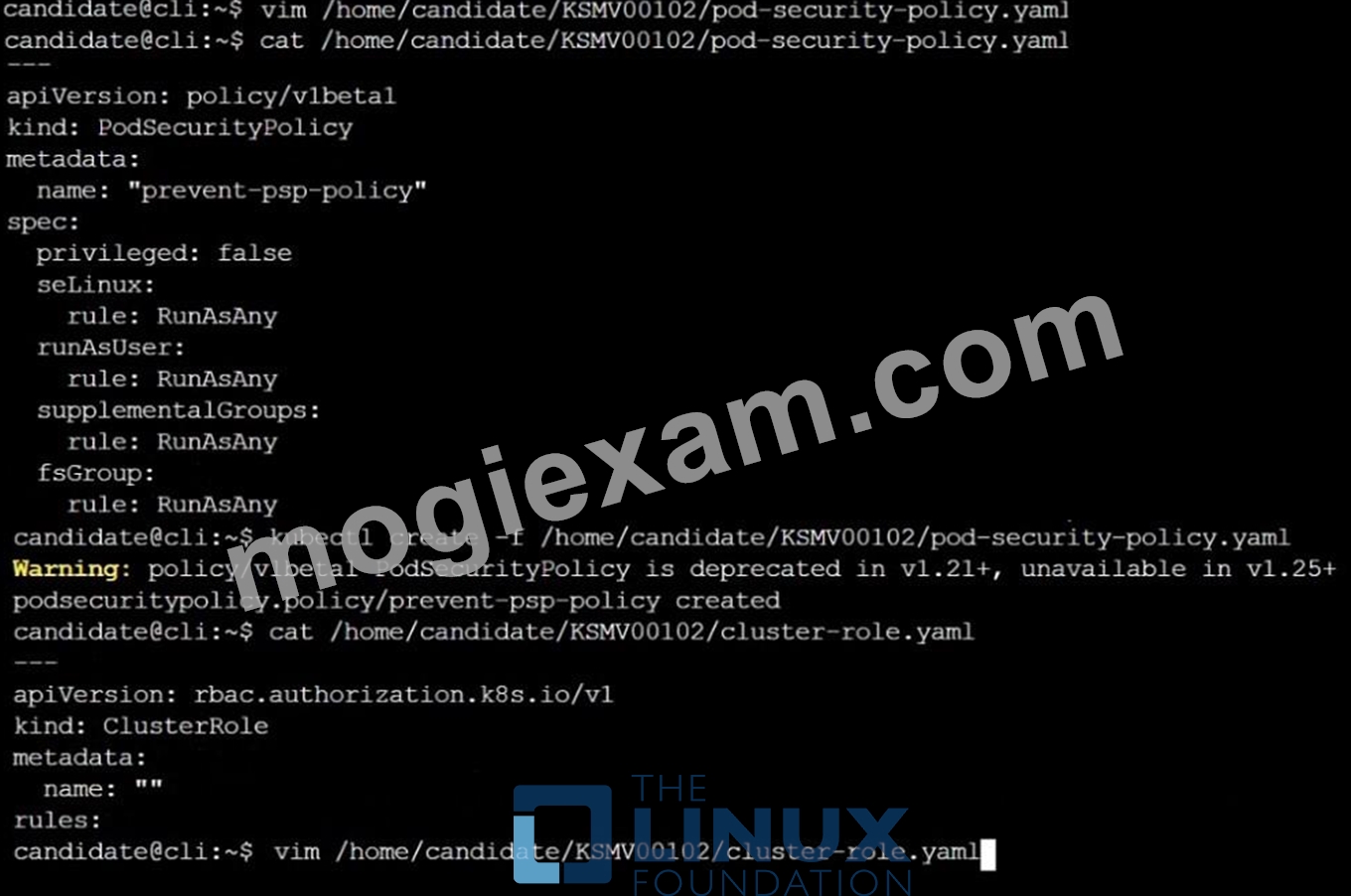
A PodSecurityPolicy shall prevent the creation of privileged Pods in a specific namespace.
Task
Create a new PodSecurityPolicy named prevent-psp-policy,which prevents the creation of privileged Pods.
Create a new ClusterRole named restrict-access-role, which uses the newly created PodSecurityPolicy prevent-psp-policy.
Create a new ServiceAccount named psp-restrict-sa in the existing namespace staging.
Finally, create a new ClusterRoleBinding named restrict-access-bind, which binds the newly created ClusterRole restrict-access-role to the newly created ServiceAccount psp-restrict-sa.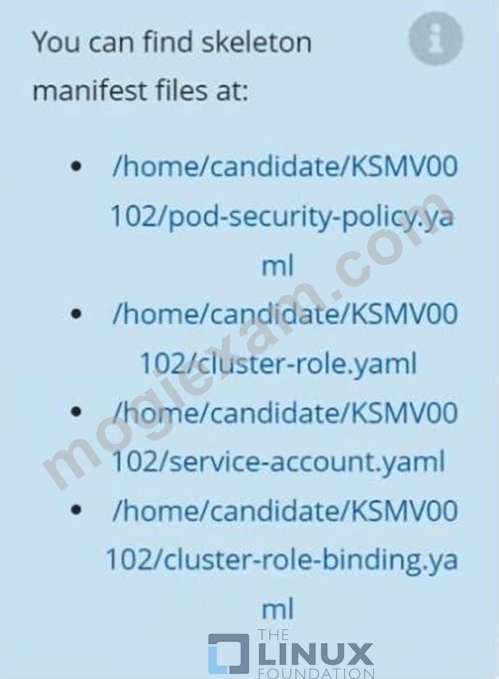
正解:
解説:
See the Explanation below
Explanation: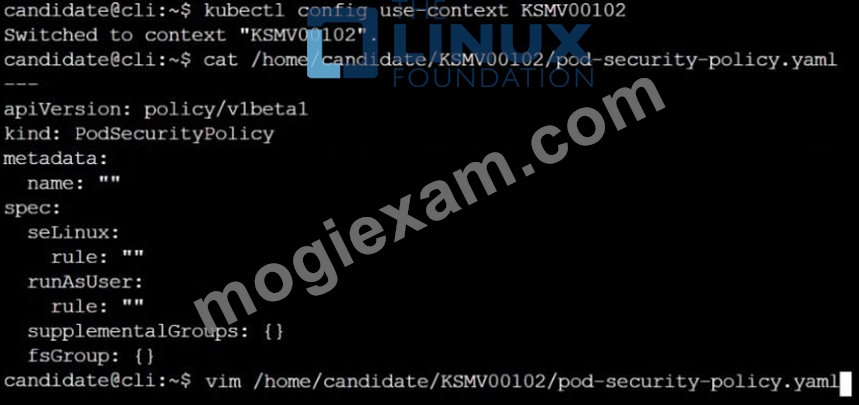
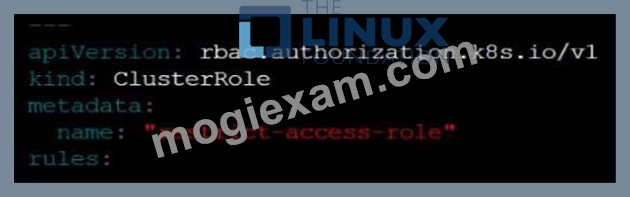
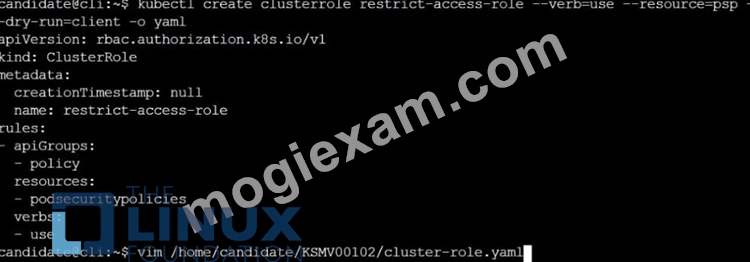
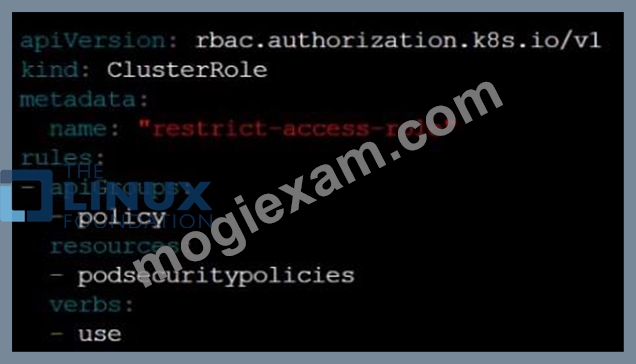
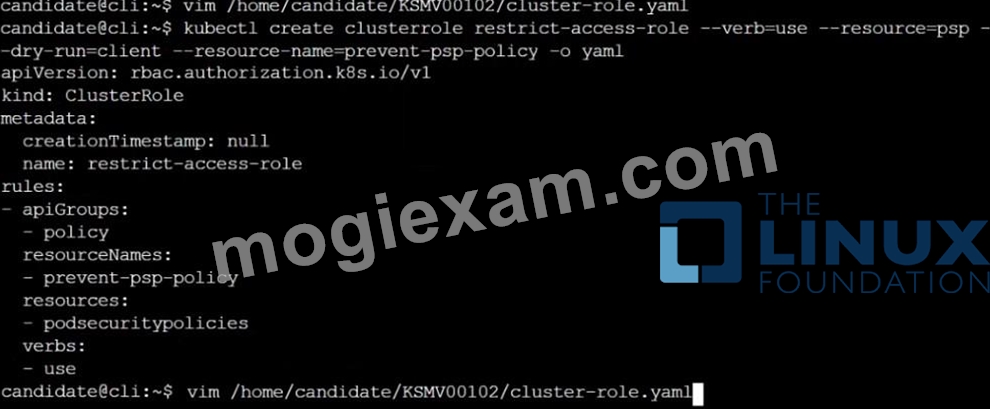
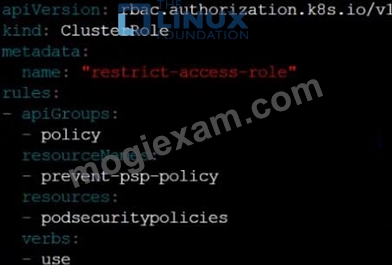

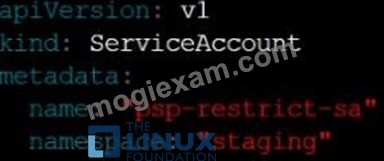
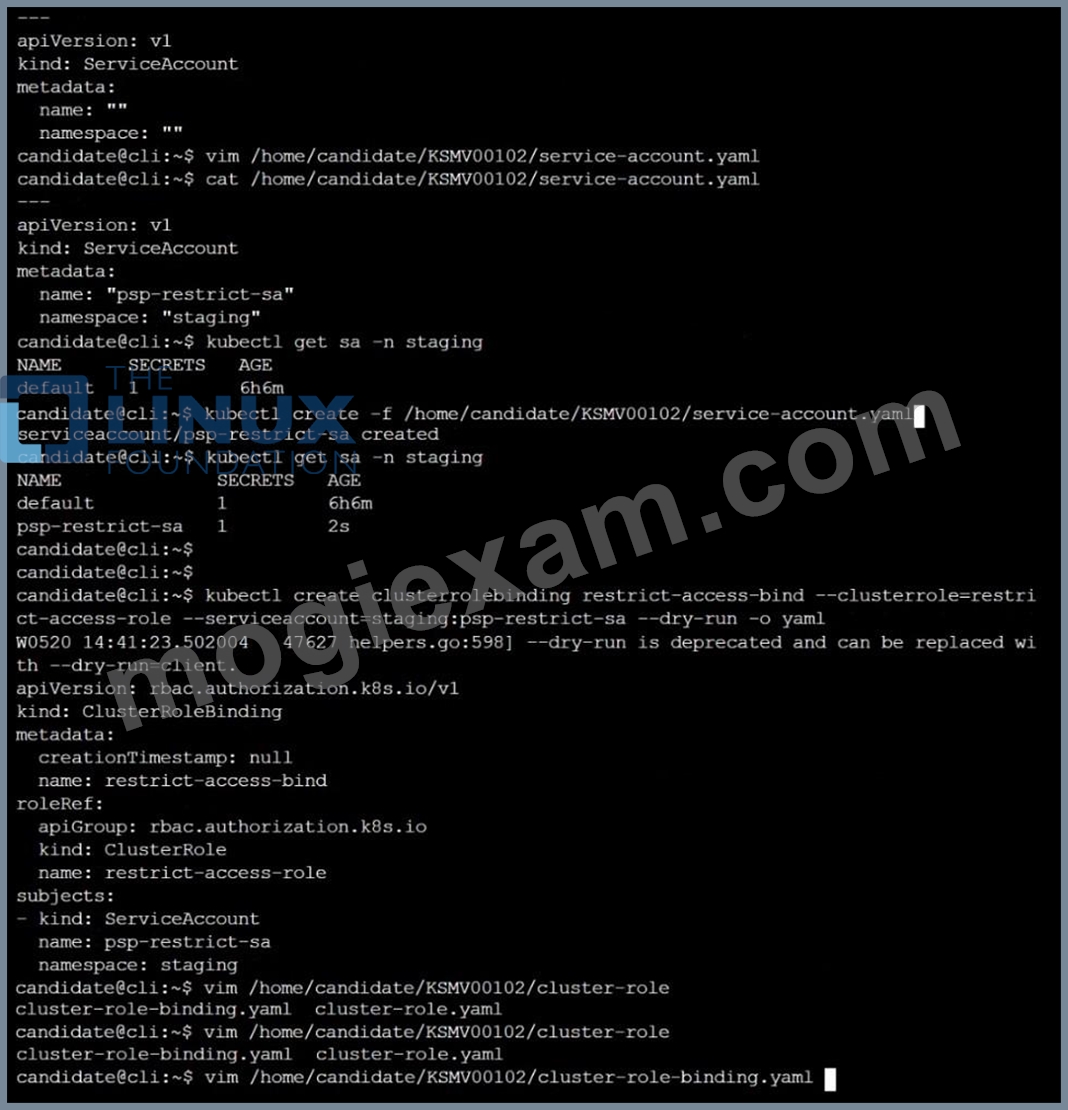
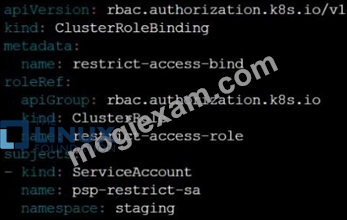
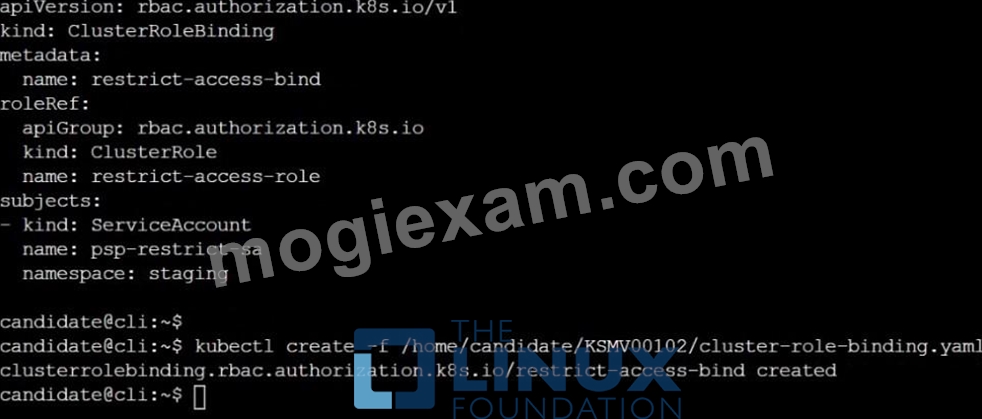
質問 # 25
......
CKS日本語版受験参考書: https://www.mogiexam.com/CKS-exam.html
- CKS出題範囲 ???? CKS資格認定 ⚗ CKS日本語版テキスト内容 ???? ✔ www.goshiken.com ️✔️で➤ CKS ⮘を検索して、無料でダウンロードしてくださいCKS日本語認定
- CKS復習範囲 ???? CKS入門知識 ???? CKSテスト参考書 ???? ➽ www.goshiken.com ????サイトにて最新( CKS )問題集をダウンロードCKS受験記対策
- 試験の準備方法-信頼的なCKS資格トレーリング試験-認定するCKS日本語版受験参考書 ???? ⇛ jp.fast2test.com ⇚には無料の➡ CKS ️⬅️問題集がありますCKS対策学習
- CKS受験記対策 ???? CKS受験記対策 ⚡ CKS復習テキスト ⚜ ⇛ www.goshiken.com ⇚で使える無料オンライン版☀ CKS ️☀️ の試験問題CKS資料勉強
- CKS資格認定 ???? CKS対策学習 ???? CKS復習テキスト ???? ✔ www.xhs1991.com ️✔️で➤ CKS ⮘を検索して、無料で簡単にダウンロードできますCKS資格認定
- 最高のCKS資格トレーリング - 合格スムーズCKS日本語版受験参考書 | 一番優秀なCKS試験対応 Certified Kubernetes Security Specialist (CKS) ???? ⏩ www.goshiken.com ⏪にて限定無料の➡ CKS ️⬅️問題集をダウンロードせよCKS出題範囲
- ユニーク-一番優秀なCKS資格トレーリング試験-試験の準備方法CKS日本語版受験参考書 ???? 時間限定無料で使える➤ CKS ⮘の試験問題は【 www.passtest.jp 】サイトで検索CKSテスト参考書
- CKS復習テキスト ???? CKS資格認定 ???? CKS合格対策 ???? ➥ www.goshiken.com ????を開いて“ CKS ”を検索し、試験資料を無料でダウンロードしてくださいCKS勉強資料
- 試験の準備方法-信頼的なCKS資格トレーリング試験-認定するCKS日本語版受験参考書 ⚪ { www.xhs1991.com }を開いて➽ CKS ????を検索し、試験資料を無料でダウンロードしてくださいCKSトレーリングサンプル
- CKS復習テキスト ⛅ CKS復習テキスト ???? CKS合格対策 ???? ➽ www.goshiken.com ????サイトにて最新{ CKS }問題集をダウンロードCKS日本語認定
- CKS受験記対策 ???? CKS無料試験 ???? CKS練習問題集 ???? ▶ www.jpshiken.com ◀サイトで▛ CKS ▟の最新問題が使えるCKS日本語受験攻略
- isaiahgkho344241.law-wiki.com, jakubaoiv830124.fliplife-wiki.com, junaidtkdk666807.shivawiki.com, zoyamsas306494.bloggerswise.com, tripsbookmarks.com, safasxhw973780.wikikarts.com, madbookmarks.com, haseebielg036598.bloginder.com, bookmarkhard.com, echobookmarks.com, Disposable vapes
さらに、MogiExam CKSダンプの一部が現在無料で提供されています:https://drive.google.com/open?id=1aQmKRK_5Xex42rPyBaHUKo4nqxwFIt49
Report this wiki page